

Supporting comfort, mobility and wellbeing
Every Dog's Wellness Journey
What is Clinical Canine Massage?
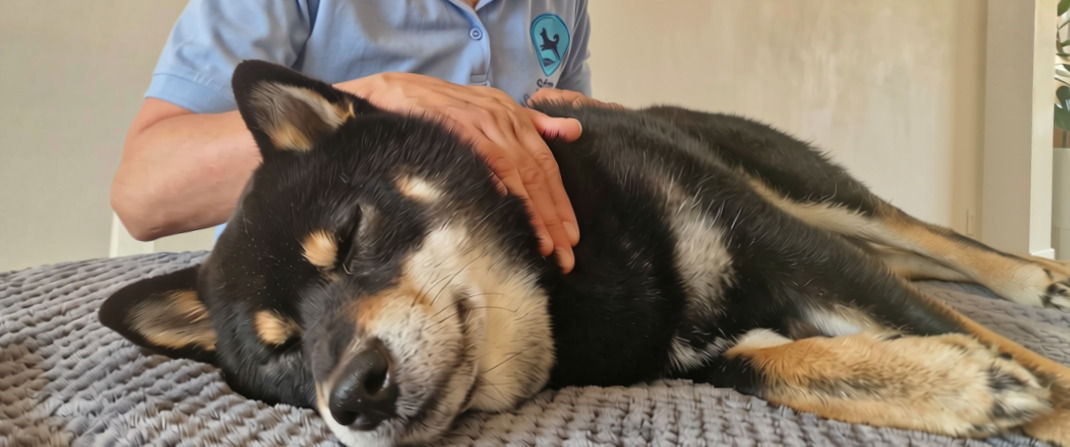
Clinical Canine Massage can help to rehabilitate soft tissues, aiding recovery from injuries such as strains and sprains, supporting the management of orthopaedic conditions such as hip dysplasia and arthritis, as well as helping sporting/working dogs maintain optimal muscular function. Clinical Canine Massage can also benefit senior dogs by reducing tightness and improving mobility and making everyday activities more comfortable. It is a holistic approach, supporting the body's natural ability to restore balance and promote optimal well-being.
Pain relief
Release tension
Improved mobility
Optimal muscular function
Clinical Canine Massage is suitable for dogs of all breeds, ages, and sizes. Many dogs can experience positive changes within 1 - 3 session, including improvements in comfort, mobility, and muscle function.
The world's first large-scale clinical trial in evidence-based clinical canine massage therapy was conducted at Winchester University and University Centre Sparsholt. The study reported 95% of dogs responded positively, with significant reductions in pain severity and improvement in mobility.
Signs You May Notice in Your Dog

You may notice one or more of the following changes in your dog. These can be signs of pain, discomfort or changes in muscular function. Clinical Canine Massage may help to relieve muscular tension, support mobility and improve functional movement.
● Limping, hopping or skipping
● Slowing down or becoming reluctant on walks
● Struggling to jump onto furniture
● Difficulty going up or down stairs
● Stiffness when getting up after rest
● Spending more time away from the family
● Lack of energy or reduced activity
● Becoming more irritable or snapping at other dogs
● Reluctance to be touched or stroked
Common Conditions Treated
● Lameness
● Sprains/Strains
● Osteoarthritis
● Hip dysplasia
● Elbow dysplasia
● Cruciate Ligament injury
● Spondylosis
● OCD (Osteochondritis Dissecans)
● Luxating Patella
● Post surgery

My Treatment Approach
I create a tailored treatment plan for each dog, based on information gathered from you and your vet, together with my own assessment of your dog. This includes observing posture, gait and coat changes, palpating the tissues and carefully observing your dog’s responses.
At each treatment, I reassess your dog for any changes, particularly in tissue quality, posture, movement and overall response to treatment. I will adjust the treatment plan as needed according to your dog’s individual needs and progress.
Throughout the treatment, I communicate with your dog and closely monitor their responses to different massage speeds, pressure levels and techniques. I always work at a pace that your dog is comfortable with.
Your dog does not need to lie down for treatment. I will work with your dog in a position they are comfortable with, whether standing, sitting or lying down. I respect each dog’s feelings and allow them to move and change position as needed throughout the treatment. Once they feel safe, relaxed and comfortable, many dogs naturally choose to lie down on their own.


Clinical Canine Massage - Home visiting service
North Essex, North Hertfordshire, Cambridgeshire
Saffron Walden & surrounding villages
Royston & surrounding villages